
Latest news
Go back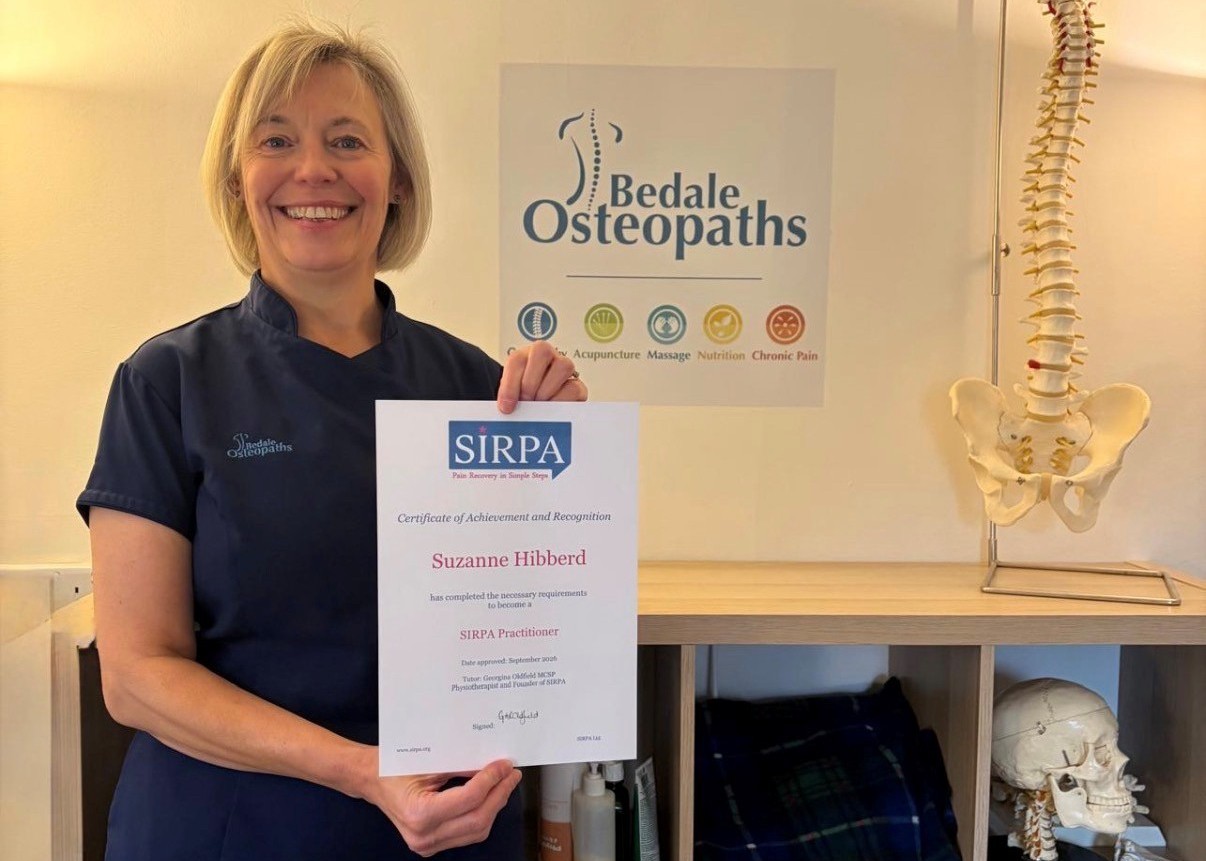
What is SIRPA? And why am I so excited to be a practitioner?
By sarahadmin
As many of my regular patients will know, over the past two years I’ve been studying persistent pain, stress and the mind–body connection.
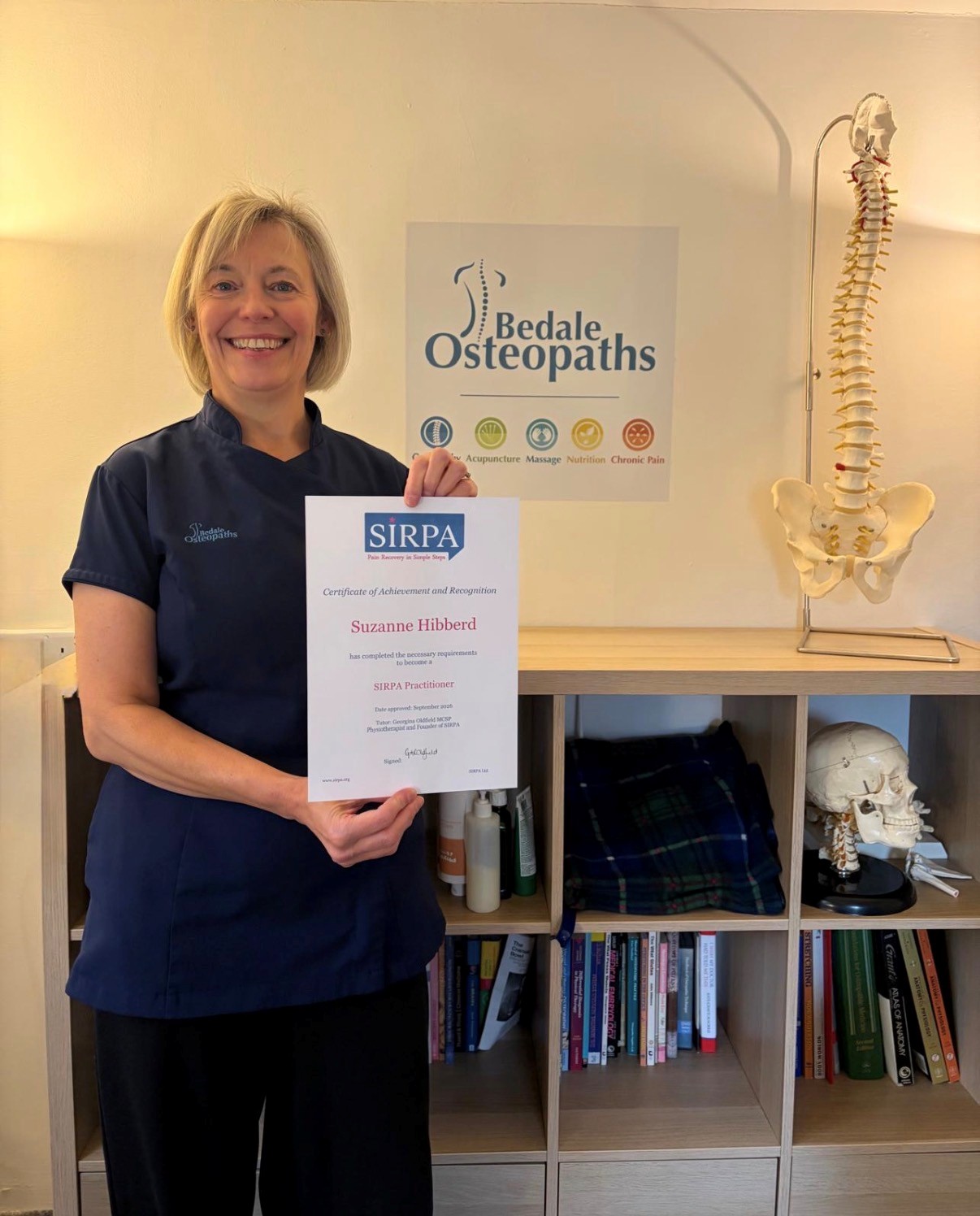
A huge thank you to everyone who has supported me on this journey, especially those patients who have been kind enough to try out some of the techniques I’ve introduced along the way — whether that’s breathing exercises, journaling or allowing me to guide you through a somatic tracking exercise. Your openness and willingness to give these ideas a go have meant a great deal to me!
So, finally, I’m absolutely delighted to announce that I am now a SIRPA practitioner! Whoopee!
That’s great, you might say, but what exactly is SIRPA, and how could it help you?
What is SIRPA?
SIRPA stands for the Stress Illness Recovery Practitioners Association. It is a growing community of healthcare and wellbeing professionals, including osteopaths, physiotherapists, GPs, nurses, counsellors and psychotherapists, who are interested in helping people with persistent pain and other symptoms that may be influenced by stress and the mind–body connection.
The approach recognises that pain is complex. Alongside physical factors, our nervous system, past experiences, emotions, beliefs and stress levels can all influence how we experience pain.
SIRPA trains practitioners to use pain education alongside a range of practical tools, which may include mindfulness, breathing techniques, journaling, emotional awareness, pain reprocessing techniques and somatic tracking. There is also a SIRPA recovery programme available online.
The approach was developed by Georgie Oldfield, a UK-based physiotherapist, drawing on work by Dr John Sarno and Dr Howard Schubiner, among others.
One of the most important aims is to help people understand what might be contributing to their symptoms and develop practical tools to support their own recovery.
The Four Key Areas
The SIRPA approach considers four interconnected areas: pain science, stressors and
emotional triggers, behaviour, and lifestyle.
1. Pain science: understanding how pain works
One of the biggest surprises for many people is learning that the intensity of pain does not always correspond directly to the amount of tissue damage.
Pain is a protective mechanism. It is designed to alert us to potential danger and encourage us to protect ourselves. However, pain can sometimes persist even after an injury has healed, our nervous system can become overprotective.
The good news is that the nervous system can change and by understanding pain and learning that it is influenced by more than just what is happening in our tissues, we can work with techniques to begin to reduce neural sensitivity and the protective response.
Our thoughts, previous experiences, worries and expectations can all influence pain, too. This doesn’t mean the pain is imaginary — the pain is real. It means that understanding the wider picture may open up additional ways to manage it.
2. Stressors and emotional triggers: understanding ourselves
We all respond to stress differently.
For some of us, particular situations, relationships or responsibilities can feel especially challenging. We may also have emotions that we find difficult to acknowledge or express, or that we tend to push aside.
Learning more about our individual stress responses can help us recognise patterns and identify situations that might be contributing to our symptoms.
This isn’t about blaming ourselves or believing that we have somehow caused our pain. Rather, it’s about developing greater self-awareness and finding ways to respond to stress and difficult emotions with more understanding and less fear.
Over time, this awareness can help us build practical strategies for managing life’s challenges.
3. Behaviour: gently changing the things that keep us stuck
When pain persists, it is completely understandable that we might become cautious about movement and activity.
We may stop exercising, avoid certain movements, withdraw from social activities or give up things we once enjoyed because we’re worried about making our symptoms worse.
Sometimes these protective behaviours are necessary, but sometimes they can unintentionally reinforce our sense of danger and make life increasingly restricted.
With the right support, we can explore ways to gradually and safely reintroduce movement and activities that matter to us.
This isn’t about pushing through pain or ignoring warning signs. It’s about finding an appropriate pace, building confidence and helping the nervous system learn that some activities may be safer than we have come to believe.
4. Lifestyle: making room for life again
When pain or other symptoms take over, life can gradually become smaller. Work, relationships, exercise and hobbies may all suffer, leaving very little room for the things that bring us pleasure.
Looking at our overall lifestyle can help us identify areas where small changes might make a difference.
This could mean reviewing our work–life balance, allowing ourselves enough rest, eating regularly and nourishing ourselves well, finding enjoyable ways to move, or making more time for friends and family.
Perhaps most importantly, it means finding ways to reconnect with the things that make us feel happy, fulfilled and like ourselves again.
These changes don’t need to happen all at once. Small, manageable steps can be a good place to start.
What does this mean for my patients?
I am still very much an Osteopath and a full, appropriate assessment of any pain is always needed. I have been teaching my patients about pain pathways and the connection between mind and body for many years. This is why I am so enthusiastic about bringing this deeper knowledge into my work as an osteopath. It doesn’t mean that hands-on treatment, physical rehabilitation or medical assessment are no longer important. Rather, it gives us another way of looking at persistent pain and another set of tools to draw upon when appropriate.
Would you like to find out more?
If you are living with persistent pain or other ongoing symptoms and would like to explore the mind–body connection, please feel free to get in touch. We can discuss whether this approach might be appropriate for you. I offer a free introductory call and am happy to chat.
You can also find out more in the following ways:
- Visit the SIRPA website: https://www.sirpa.org/sirpas-approach/
- Watch Georgie Oldfield’s TEDx talk: https://www.youtube.com/watch?v=BxsBJgMKHrw
I’m really excited to continue developing this work and to share what I’ve learned with those who may benefit from it.
Thank you again to everyone who has been part of this journey so far!
Sue x