
Latest news
Go back
Osteopath vs AI: Can ChatGPT work out what’s causing your pain?
By sarahadmin
For many years, “Dr Google” has helped people research their symptoms, explore possible causes and try to work out what might be wrong. More recently, the rise of AI tools such as ChatGPT has given people another way to investigate their symptoms and arrive at their own ideas about why they might be experiencing pain.
There’s nothing wrong with wanting to understand your body better, being informed, asking questions and taking an interest in your health are all positive things.
But can AI replace the expertise of a face-to-face assessment?
When AI gets it right… but misses the bigger picture
I recently saw a patient who had used ChatGPT to investigate arm pain, tingling and a sensation of their arm “feeling dead”.
AI had actually done a pretty good job of identifying a possible explanation: Thoracic outlet syndrome, a condition in which nerves or blood vessels can become compressed in the space between the neck and shoulder. However, that was only part of the story.
Following a thorough, face-to-face assessment, including specific physical tests, it became clear that the initial explanation didn’t tell us everything we needed to know. An underlying shoulder muscle problem was an important part of the picture.
This distinction mattered because understanding the possible cause of the symptoms was only the first step. We also needed to work out what was contributing to the problem, which movements or activities might be aggravating it, and what approach to treatment and exercise was most appropriate.
Without that fuller assessment, advice based on the initial diagnosis alone might not have addressed the underlying issue — and could have sent the patient in the wrong direction.
AI had identified a possibility, but a clinical assessment helped us build a more complete picture.
Why a face-to-face assessment still matters
Pain and injury are rarely as straightforward as a list of symptoms might suggest.
Two people can experience very similar symptoms for quite different reasons. Equally, the same underlying problem can affect two people in very different ways.
We are complex beings, and there is often more going on than a symptom checker or online conversation can establish.
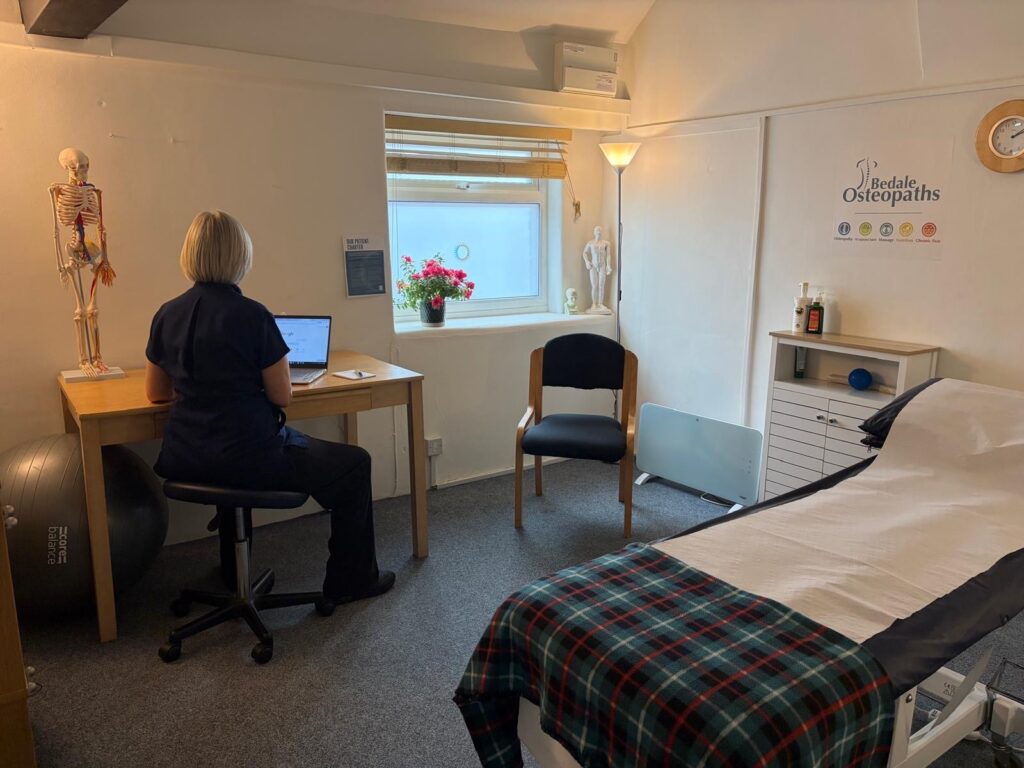
A face-to-face assessment allows an osteopath to consider the whole picture, including your medical history, how your symptoms started, what makes them better or worse, how you move, and the findings from relevant physical tests.
It also allows us to consider whether your symptoms might need further medical investigation or referral, rather than simply assuming they are caused by a muscle or joint problem. All of this helps us make a more informed clinical judgement and tailor advice, exercises and treatment to the individual.
So, is AI useful?
AI can be a helpful starting point for learning about possible causes of symptoms, understanding unfamiliar medical terms and preparing questions to ask a healthcare professional.
But it has limitations. It can miss important details. The important thing is to recognise the difference between identifying a possible diagnosis and fully exploring what is actually happening in your individual case.
Experience, expertise and a personal approach
Our osteopaths have completed four years of professional training, supported by years — and, in some cases, decades — of clinical experience. That experience helps us look beyond the obvious, consider alternative explanations and use our assessment findings to guide the next steps.
So if you’re struggling with pain or stiffness and need advice tailored to you, we are here to help.
If you’re unsure whether osteopathy is appropriate for your symptoms, give us a call. We are always happy to discuss your concerns and help you work out what to do next.
If you have persistent or increasing symptoms please seek appropriate medical advice via your GP, 111 or www.nhs.uk, it is always better to be safe than sorry.